miércoles, 25 de mayo de 2011

COLOMBIAN CULTURE


Our country has a very diversified and rich culture, Colombia is one of the countries with most festivities, also colombian is better know for the kindness of the people, the passion for the things, and the desire for do the right  thing, recurrence and ingenious. We are happy and brightside people, characteristics that do the people from other countries fall in love not only of the natural beauties but also of their population.

There's no doubt that we call colombian culture to a serious of manifestations that form part of the common lifestyle that characterize to the habitants and where is clearly evidencied the influence of the elements from other racil cultues; Colombia is a multietnical country for the inheritance from spanish, native and black cultures. Most part of the population is of a mixed racial ancestry, it means a mix between white and indian.

Another characteristic very own from colombians is the good use of the spanish, consider like one of the best between hispanic counties   

lunes, 4 de abril de 2011

RETAIL CREDIT SERVICE


The retail credit servide is the credit granted by a firm to consumers for the purchase of goods or services. Retail credit can be granted either through outside credit cards such as Visa, MasterCard, and American Express or through retailer-generated credit cards. In-house credit cards encourage store loyalty.
  • A retail credit line generally is a credit card for use at one particular store. The store grants you special perks for using the credit card to make purchases. The credit card issuer often is one of the major credit card companies acting on behalf of the retailer, not the retailer itself. Much like any other credit card that offers rewards, specific purchase rules often apply. Some examples of purchasing rules are specific dates when you are allowed to use the credit card for discounted goods, a brief introductory discount followed by a smaller discount later, and blackout dates when rewards cannot be used.

Use of Retail Credit

  • In the United States, stores like J.C. Penny Co., Kohl's, eBay and Amazon are examples of businesses that use retail credit to promote consumer loyalty. Stores often offer you a large discount if you apply for the credit card more discounts later. By having its own credit card, the retailer avoids paying fees on other credit cards. One popular reward for signing up for store card is the offer of "no payments and no interest" for a specified time. While this might appeal to you, you should also take note that after the promotional period, a high interest rate might go into effect. Retail credit is usually for consumers, but businesses can also use these credit lines.


Retail credit facilities can take the form of point of sale finance options in retail outlets. For example a $10,000 motorcycle might be a lot for a consumer to pay up front. Retail credit facilities will loan the $10,000 to the consumer, who will then pay it back with interest in monthly instalments over several years. Some offer low or even no payments over an initial time period, but then charge above average interest.

Retail credit facilities give the option of consuming now or consuming in the future. Higher interest rates may be acceptable to some consumers, depending on the consumers' unique consumption utilities. The risk of default is a factor that determines the interest rate that retail credit facilities charge.


lunes, 21 de marzo de 2011

INTERNATIONAL ECONOMIC - MIND MAP


International Economics have diferent features for work good, this feautures are:

  • Balance of payment
  • Exchange rates
  • Absolute Advantage
  • Comparative advantage
  • Reasons for trade
The balance of payment is the method countries use to monitor all international monetary transactions at a specific period of time, is all about the trade of goods and services, this trades are conducted by both the private and public sectors are accounted for in the balance of payments in order to determine how much money is going in and out of a country.

Exchange Rates are all about the import and the export of goods aroun the world, also for manage this features you have to know about the differences in the interest rates and managmente floating.

Absolute advantage is one of the trade theories is about how countries should specialize in producing what they are best at things they have an absolute advantage.

Comparative advantage is another of the trade theories is about how countries will trade without having to have an absolute advantage, they only need a comparative, this trade happens when the "relative" cost of doing business is  diferent between two countries, there are benefits to trade even when one trading partner is absolutely better in production.

For last, the reasons of trade are access to different goods, potencial for economics, increase of competition, generated economic grow, add global value, social and cultural benefits and factor endowments.

TYPES OF INVESTMENTS

There are seven differents types of investments


sábado, 19 de marzo de 2011

INTERNATIONAL TRADE THEORIES

THEORIES OF TRADE


MERCANTILIST THEORY 

  • To export is good, to import is to be avoided. When you exported, you receive payment. Currency based on gold standard; problem with this theory is that excludes the fact that in some cases it is good to import.


ABSOLUTE ADVANTAGE

  • Countries should specialize in producing what they are best at things they have an absolute advantage. incentive to trade is based on each country having an absolute advantage in a product this theory seems to make sense in situations, where the circunstances of the geographic and economic enviorement are relativity simple and straight forward.


COMPARATIVE ADVANTAGE

  • Countries will trade without having to have an absolute advantage, they only need a comparative, this trade happens when the "relative" cost of doing business is  diferent between two countries, there are benefits to trade even when one trading partner is absolutely better in production.


FACTOR ENDOWMENTS

  • A country should export products that use intensively its relatively abundant factors, and import products that use intensively its scarce factors. A country should export products which are made from material.  


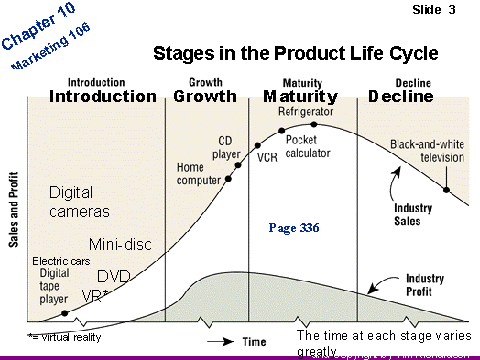
THE PRODUCT LIFE CYCLE


INFLATION


The rate at which the general level of prices for goods and services is rising, and, subsequently, purchasing power is falling. Central banks attempt to stop severe inflation, along with severe deflation, in an attempt to keep the excessive growth of prices to a minimum. 


In other words, a decline in the purchasing power of your money". But there is more to inflation than that. There is "Price Inflation" and "Monetary Inflation".
Technically, Price Inflation is when prices get higher or it takes more money to buy the same item.

CAUSES OF INFLATION

There are a few different reasons that can account for the inflation in our goods and services; let's review a few of them.
  • Demand-pull inflation refers to the idea that the economy actual demands more goods and services than available. 
  • The cost-push theory , also known as "supply shock inflation", suggests that shortages or shocks to the available supply of a certain good or product will cause a ripple effect through the economy by raising prices through the supply chain from the producer to the consumer.
  • Money supply plays a large role in inflationary pressure as well. Monetarist economists believe that if the Federal Reserve does not control the money supply adequately, it may actually grow at a rate faster than that of the potential output in the economy, or real GDP.
EFFECTS OF INFLATION

The effects of inflation can be brutal for the elderly who are looking to retire on a fixed income. The dollars that they expect to retire with will be worth less and less as time goes on and inflation goes higher.

When the balance between supply and demand spirals out of control, buyers will change their spending habits as they meet their purchasing thresholds and producers will suffer and be forced to cut output. This can be readily tied to higher unemployment rates. When extremes arise in the supply/demand structure, imbalances are created.


INFLATION IN COLOMBIA


FINANCE GLOSSARY

SOME FINANCE GLOSSARY


Access


A former credit card system that was sold to Mastercard and discontinued.


Balance Sheet

One of the main components of a company's report and accounts, the balance sheet provides a snapshot of everything the company owes and owns at the end of the financial year in question. On a specific date it lists: tangible assets, intangible assets, stock, debtors, cash, bank creditors, trade creditors, share capital and reserves.


Call Payment

A payment made by investors for new shares. The term would apply to payments made when a company first floats on the stock exchange and also when it has a rights issue. 


Daily Change


The daily change in the price of a share or other security, i.e. the difference between the most recent price of a security and the previous day's closing price.


Earnings

The annual profits (revenues less cost of sales and operating expenses) of a company after deduction of tax, dividends to preference shareholders and bondholders.


Fed

See Federal Reserve System.


Gain

The increase in the value of an asset that had been bought. More specifically, it is the amount chargeable to capital gains tax (CGT) from gains made on the disposal of an asset. 


Heavy Market

A market in which there are more sellers than buyers resulting in falling prices.

Incapacity Benefit
A state benefit payable after the expiry of state sickness benefit if a person is still unfit to work. This replaced invalidity benefit and carried a reduced level of benefit.


Junk Bonds

Bonds which offer high rates of interest but with correspondingly higher risk attached to the capital. In the US they carry a credit rating of BB and below. Junk bonds fell into disrepute in the late 1980s, and are now termed 'high yield bonds'.


Long Term Debt

Debt liabilities due in one year or more.


Merger

The process by which two companies become one. If the companies are listed, the merger may be by agreement, or hostile


Net Cash Flow

Operating cash flow + dividends received from associates - dividends paid to minorities or preference shareholders +/(-) interest received/(paid) - tax paid.


Open Offer

An open offer, also known as an entitlement issue, is an offer made by a quoted company to its shareholders inviting them to buy new shares in the company at a set price, which is normally lower than the current market price.


Par Value

The issue price of a security (stock, share, bond etc). Par value is the same as nominal value and bears no relation to the market price


Quotation

The highest bid price and the lowest offer price of a security available at any particular time.


Real Account

A ledger account detailing assets and capital (such as buildings and machinery).


Sales

Total value of goods or services sold by a company in a period of time, often called turnover or revenue. Sales are recognised in the accounts at the point when the company either has received payment or is very likely to do so.


Tax

An amount levied by a government body on an income, product or activity, and used to finance public services and goods. It may be direct on an income or indirect.

Ultra Vires

Actions by a body that fall outside the remit of its charter and might lead to legal action by affected parties.

Value

The worth or desirability of something expressed as an amount of money.

Weak Market

A stock market where volume is low and the spread is high.

Yield Curve

A graphical representation that plots current yields of a set of bonds or fixed interest securities against their times to redemption (maturity).